Wednesday, October 16, 2019

Words of wisdom...

As the season should finally be around the corner I felt it was a good time to dwell on the meaning of life and skiing and other eternal truths. Since a picture is worth a thousand words, here are a couple of thousand words of wisdom:


Sunday, October 13, 2019

Fall in the Wasatch

Fall is a great time to be out in the Wasatch with a bunch of benefits:

1. Given the colors, it's even more beautiful out there than usual.
2. The air is clear and it's not hot so if you are working out you can really go after it in some comfort.
3. It's not yet the ski season so solitude is still possible - the downside of that is of course that "It's not yet the ski season"...

Here are a couple of pictures plus a plug for my backpack (click to enlarge):

Fall colors wit on the horizon Murdock Peak (the highest one) and to its
immediate left Todd's Bowl and further to the left (past the trees) North Bowl.

View into Lambs Canyon.

The one and only true nðrŧ (nope, it’s not a typo, see here) COULOIR 22.


Saturday, September 28, 2019

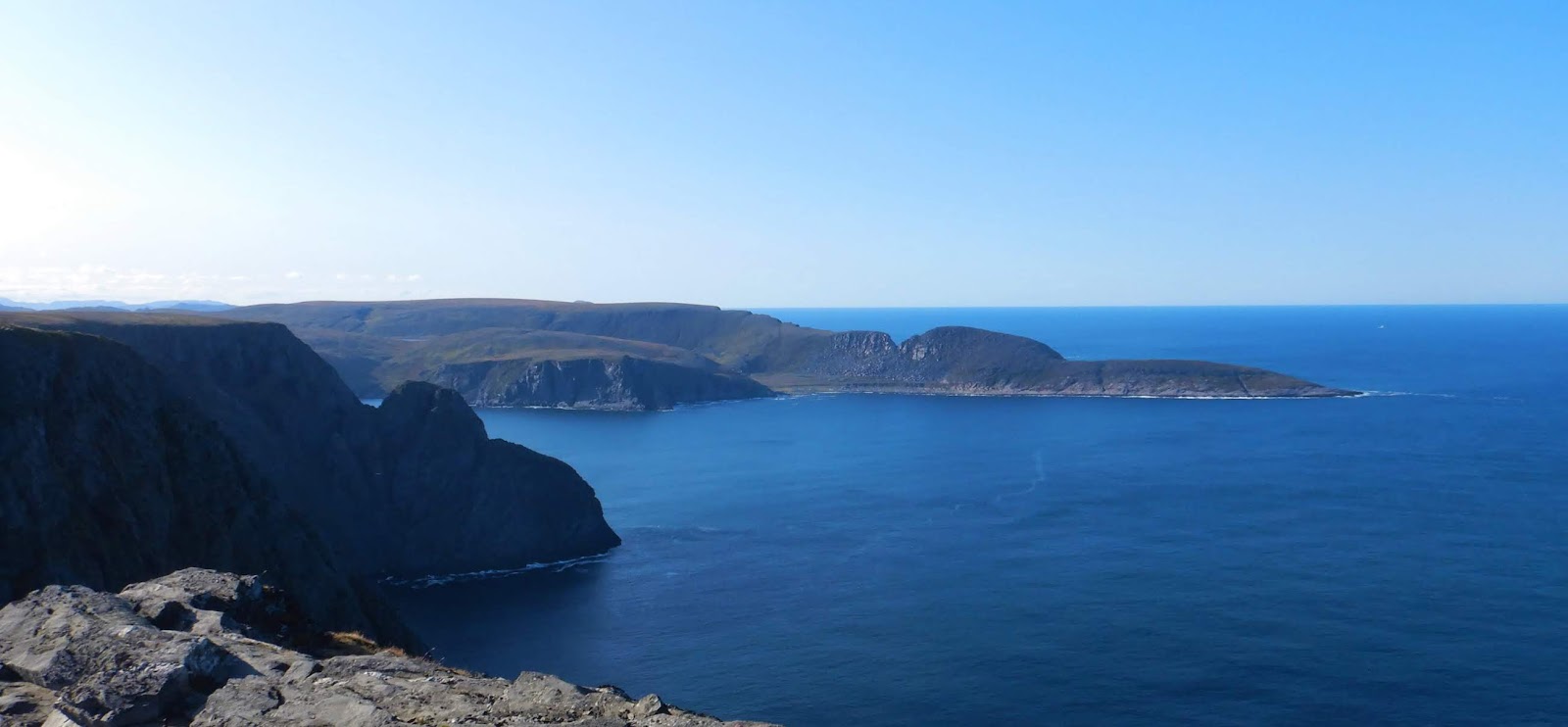
NORDKAPP! 71° 10’ 21”

I left Karesuando, which is in Sweden on the border to Finland, on September 15 and crossed the bridge crossing the Muonio River which materializes the natural border with Finland. No border controls here, cross the bridge and you're in Finland! This is the very northernmost part of Finland in the municipality of Enontekiö, an important part of Finnish Lapland. This is a narrow strip of Finland so within a few hours, you get into Norway and then have to cross the entirety of the northernmost part of Finnmark (Norwegian for Lapland). Here I got to drive through Katokeino, probably the largest center of any Sámi reindeer herding district in Norway. After that, it's through Alta and on to Nordkapp.


At 71° 10’ 21” of Latitude North, Nordkapp is the northernmost spot on mainland Europe and so also the northernmost spot in Lapland. This has been really high on my bucket list for a very long time. I never got to it because you don’t just happen to “get to” Nordkapp. It is literally out of the way. 
We are here in the Northernmost part of Arctic Europe, it is actually the end of the road and you are here overlooking the Barents Sea, part of the Arctic Ocean. Also known as the “end of the habitable world”, it is a place of almost incomprehensible beauty. It surely is an indescribable beauty to this author so I am not even going to try. Here are some pictures, they don’t either do the place justice but I feel the pressure to show something... (click to enlarge):


71 degrees north is as long as this goes on land...

View of Lappiljävri in Finland. The literal translation would be "Lapp Lake".

Entering Norway that lets you know that
you will be sharing the road with snowmobiles

Katokeino, the largest reindeer herding center in Norwegian Lapland.
Here on the signage, they not only add the name in Sámi, but the Sámi
version is also first, as it damn well should be everywhere in Lapland!

To the right the church of Katokeino.

A view of Alta River.

The hills just south of Alta...

...still south but very close to Alta.

Partial view of Alta Fjord - I don't have an objective
wide enough for a full view.

Reindeer herd on the tundra at Gukkesguravarre. Did you know that the
word "tundra" comes to us from the Sámi language? 

View of a river as I get close to Olderfjord...

...same river different view.

A traditional Sámi hut. The most common one was the "Lavvu" 
(similar to the tipi) but these semi-solid structures had their use too. 
Some of these would be exclusively for cooking, others for 
temporary shelter on the reindeer migration...

...a larger and more elaborate one that would serve as a shelter.

A fishing station in Porsanger Fjord. This is the land of the "Sea-Sámi".
They were Sámi that mainly lived off the sea (fishing and hunting sea
mammals) while reindeer herding was a supplement. The land Sámi
would mainly live on land mammal hunting and pastoralism with
fishing being the supplemental activity. 

A smaller Fishing station on Porsangen Fjord.

Lone reindeer on Porsangerhalvøya...

Still on Porsangerhalvøya a cow and her calf.

Closing in on the "ends of the inhabitable world"...

Getting to the end, Máhkarávju (in Northern Sami) or Magerøya
(in Norwegian)This is the northern peninsula at the end of which,
after another 5 - 6 miles, the road comes to an end at Nordkapp.

The dramatic cliffs of the north.


To the immediate East of Nordkapp.

Nordkapp overlooking the Arctic Ocean. It is materialized by the globe.


KARESUANDO (68.4380 N, 22.4511 E)

After Vilhelmina and Jokkmokk, this is another historic Sámi village that, till this day, has a majority Sámi population. It is ancient reindeer nomadism land that more recently has morphed into a modern reindeer herding district. By modern reindeer herding is meant herding by snowmobile rather than on skis. In the late 50s, to early 60s snowmobiles became reliable enough to be entrusted Arctic winter duty and the Sámi switched from wooden skis to snowmobiles for winter herding. Not too long later they adopted the dirt bike for summer duty and, in some cases, we now, on occasion, even see helicopters being put to work.

SPIRITUALITY
One of the very special aspects of Karesuando lies in its recent history. Since times immemorial the Sámi spiritual life has been one shared with the Uralic peoples of the Arctic. It is a natural belief system focused on hunting, the shared northern cosmos, typically three “worlds” (above, below, and ours in the middle), and spirits that can be shared between animal and human forms with full equality of purpose and capabilities. The mediator in this belief system is the Noaide, what we know from other circumpolar cultures as the Shaman. This is an outrageously short summarization and thus oversimplification, but it will fill our contrasting needs in the description of what happened in Lapland starting in the middle ages. 

CHRISTIANISM
It seems that the first Christian church built-in Lapland (known as Finnmark in Norway) was built on the initiative of the Norwegian crown in Tromsø which at 69.6492 North is well into the Arctic circle. The church was built in 1250, was named the Church of Santa Maria, and seemingly was intended as a missionary church. This started an initially mellow effort by the Christian church to “save” the Sámi from their “pagan” beliefs that obviously was the “devil’s work”.

After Tromsø, and in the ensuing centuries, a handful more churches were established in what was considered strategic Sámi strongholds i.e. migration centers where the nomadic winter camps (always the most important camp) would concentrate a fair amount of Sámi in one place. This is also where the winter markets would be formalized by the various crowns (good for commerce but, more importantly, tax collection).

A few centuries into the conversion efforts, the church decided it was time to step up the pace, this was especially true in the 17th and 18th centuries and this did not come without friction. There was bad blood because, as if the “saving” of souls was not bad enough, the church often sided with Norwegian or Swedish officials and tradesmen in what grew into an exploitation alliance. One of the aspects of this was corrupt businessmen that would get the Sámi drunk and, to more or less successful extents, rob them of parts or the entirety of their reindeer herds. Being in cahoots with the local sheriffs, this activity was lucrative and seen as low risk. The church would turn a blind eye and now this whole coterie of crooks could even get away with feeling good about themselves...

One preacher after the other came to do missionary work over the centuries and the one mostly resembled the other and many Sámi would just try to seem as converted as possible. Although some, on occasion, would be real conversions, many more would at the very least covertly go on with their traditional beliefs and rituals. Shamanism was known to be active to at a minimum into the 1950s in Karesuando.

LAESTADIANISM
But, in Karesuando, something changed in the mid 18 hundreds with the arrival of a very different kind of pastor. Lars Laestadius started preaching in Karesuando in 1845 and made a deep impression on his Sámi congregation and, not only because like so many other revivalists of his day, his sermons could get pretty thunderous. Although an official protestant pastor of the Lutheran strain, Laestadius was uniquely positioned to formulate the Lutheran message in a format palatable to the Sámi. That he was the one to successfully do this is explained by the fact that his mother was Sámi. He knew and appreciated the language, culture, and probably the (then covert) ancient spiritual practices. Where Catholics and Protestants would argue about how redemption would happen and the meaning of a congregation, Laestadius preached that the body of Christ was the congregation. That the congregation and only the congregation had the power to give absolute forgiveness of all sins. This spoke to the very communal life and culture of the Sámi. Now, although the congregation is the divine body, the pastor was of utmost importance as the “mediator” between the congregation and the other world. This, in the ancient circumpolar spirituality of the Sámi, was the role of the Noaide (the Sámi shaman). It was a way to "translate" Lutheranism to the Sámi in a to them, very palatable way. 

In addition to this spiritual quality of the message that became known as Laestadianism, there was a more temporal aspect that meant a lot to Sámi day to day life. Seeing the devastating effects of alcohol on the Sámi’s dealings with Swedish tradesmen he, in an alliance with the Sámi women, successfully pushed abstinence as a moral imperative on his congregation. Bringing this one step further, he was able to push through a law forbidding the sale of alcohol in Swedish Lapland. This, at a very dark moment in Sámi circumstances, set the stage for a spectacular Sámi spiritual, moral, and material revival. It was indeed so successful that, although regarded with suspicion and discouraged by much of protestant officialdom, Laestadianism has survived till this day and is practiced by some Sámi in Karesuando and beyond today.

Here are some pictures (click to enlarge):


After a few days in Jokkmokk, it was off to Karesuando
and almost four more degrees of latitude north.

The cabin Laestadius first lived in then converted into his church.

The storage shed he used that you can see part of
in the picture above.

Interior view of where his flock would congregate...

...same room - different angle.

This picture is hanging in the cabin.
Lars Levi Laestadius - 10 January 1800 – 21 February 1861.

Saturday, September 21, 2019

Still in Jokkmokk

Today 09/12/2019) the weather looked up a bit which improves the pictures a little. Here are some more pictures taken in the general Jokkmokk vicinity. (Click to enlarge): 

Below the tree line, a lot of Lapland looks just like this.

Traces of the last Ice Age are everywhere, here is a large rock eroded by the ice sheet as it retreated between 22,000 and about 11,000 years ago.

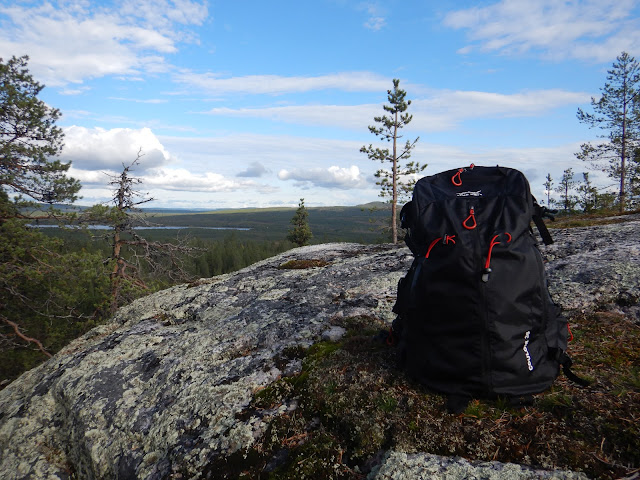
https://truenorth-adventure.com/product/couloir-36/
...another ice eroded rock. This one serving as support for the true north COULOIR 36 ski backpack. There is not going to be a place much more "true north" than this. Disclaimer: This blogger has a very personal interest in all true north products.

A lake in Skabram, Lapland.

More reindeer. Notice the size of the antlers on the one in the center of the picture. Their are 7 subspecies of reindeer. Four of them in America where they are known as Caribou and three in Eurasia. Of all those species the North European one is the one with the largest antlers and also the only species where both the male and the female have antlers.

Friday, September 20, 2019

First snow!

This is the first snow in Summit Park this morning around 7 am. Always a happy occurrence! I wasn't there but The Whippet "Senior Summit Park Correspondent" took this unforgettable shot! (Click to enlarge):

Jokkmokk


In the last post, I explained that a “Sameby” is an organization that federates some number of reindeer herding outfits, and said I would expand on that in the next post, so here goes.

There are in Sweden 51 “Samebys” (the Swedish plural is Samebyar). Jokkmokk is home to five of those “Samebyar”. To give an idea of the scope of these outfits, the largest of the five is Sirges Sameby which is also the country’s largest with 15.500 reindeer under management, about 100 individual herders/families, and 5,200 sq miles of grazing land. The second largest one is Tuorpon Sameby with a herd of about 9,000 heads, about 47 individual herders, and 5,100 sq miles of grazing land. These two are “Mountain Sámi” outfits. The other two are “Forest Sámi” outfits and so are smaller.

The Sameby is a registered business entity in its own right just like every herd belonging to it are as many separate businesses. The main functions of the Sameby is to provide common infrastructure such as the fencing used at the separation of the herds. In Lapland, they don’t use fencing to control grazing or the regular movement of the herds. The reindeer migrate from mountains to the lowland forests and back up essentially on their own. The herders follow the reindeer and on occasion push and prod them as need be but never fence them in except for twice a year: The annual marking of the younglings born earlier in the year and the fall slaughter. On those two occasions, mobile fencing is used to control the reindeer. These fences are used for all the reindeer herds and so as a common good is provided for, and managed by, the Sameby. The Sameby also manages hunting allocations such as the number of moose each herder will be allowed to kill in any given year. The distribution of grazing land among the herders as well as the fishing rights also fall under the Sameby. Essentially anything that, in the regular herding and hunting/fishing life, affects more than one herder is the purview of the Sameby, the “common good”. In this respect, the modern Sameby parallels the ancient Siida council. The one defining difference though is that in the old system, it was the Siida that was the owner of all the reindeer while in the Sameby the herds are owned by the individual herding families. This is a distinction that has had an impact on the culture and, some say, fostered a lower level of solidarity between the Sámi today than in the past. Having said that, the Sámi culture, till this day, remains very communal, collegial, and with exceptionally smooth conflict resolution. All issues facing members of a Sameby are resolved by the council which has a leader, a kind of first among equals. There again there is a clear parallel with the old Siida structure that was led by a council “chaired” by a Siid’ja. There is no formal title for the Sameby “chief” but I have seen some journalists in the Lapland local press refer to the leader of the Sirges Sameby as “the chairman”. The selection criteria for a council chief is that he has a good sense of justice as he makes decisions for the entire group and arbitrates a fair amount of fishing/hunting/land right issues. Some Sámi have told me that that the really defining quality is diplomacy, which given the function is not too surprising.

Other than the few days that the reindeer spend inside fencing (as mentioned above), the rest of the year the reindeer are truly “free free-ranging” i.e. they are free-ranging with no fences. The Sámi will say that that’s the real difference between semi-nomadism and cattle ranchers, that the first follow and manage animals that feed themselves while cattle feed has to be managed and provided for by the rancher.


Here a couple of pictures I took on a hike northeast of Jokkmokk (click to enlarge):

This guy stumbled into me on my hike. He was with a few more but the scampered off while curiosity was stronger than the self-preservation instinct. This is a well-known fact about reindeer and why in the past reindeer hunters would be so successful using decoys to attract the curious reindeer. 

There are just about infinite quantities of lingonberries and blueberries in Lapland.

A couple of the many thousand lakes in Lapland.